
Honouring Cacao: Remembering the Story Behind the Sacred Tree
“Chocolate is a divine, celestial drink, the sweat of the stars, the vital seed, divine nectar, the drink of the gods, panacea and universal medicine.”
— Geronimo Piperni, quoted by Antonio Lavedán, Spanish army surgeon, 1796
Long before cacao became a chocolate bar, a sweet treat and a global commodity, it was considered a sacred plant with a remarkable cultural history.
For thousands of years, cacao has been cultivated, prepared, exchanged and celebrated by the peoples of Central and South America. It has been used as nourishment, medicine, currency, offering, as a ceremonial drink, and woven into stories of creation, community, fertility, life and death.
Today, when cacao is available to us at the click of a button, it is easy to forget the extraordinary journey contained within every cup.
To honour cacao means remembering that history.
It means recognising the Indigenous cultures that first cultivated and worked with the plant, the farmers who continue to grow it today, and the tropical ecosystems on which cacao depends.
And perhaps most importantly, it means remembering that cacao existed for thousands of years before chocolate existed at all.
The Ancient Origins of Cacao
For many years, the earliest known use of cacao was associated with the ancient cultures of Mesoamerica. More recent archaeological research has taken its story much further south and considerably further back in time.
Evidence discovered at the Santa Ana–La Florida archaeological site in southeastern Ecuador has shown that people belonging to the ancient Mayo-Chinchipe culture were using cacao approximately 5,300 years ago.
Researchers found cacao starch grains, traces of theobromine and ancient cacao DNA inside ceramic vessels at the site, providing the earliest archaeological evidence currently known for cacao use in the Americas. The findings also support the Upper Amazon region as an important centre of cacao's origin and early domestication[1].
From the Amazonian regions of South America, cacao travelled through networks of trade, cultivation and cultural exchange, eventually becoming deeply embedded within the great civilisations of Mesoamerica.
The Olmecs
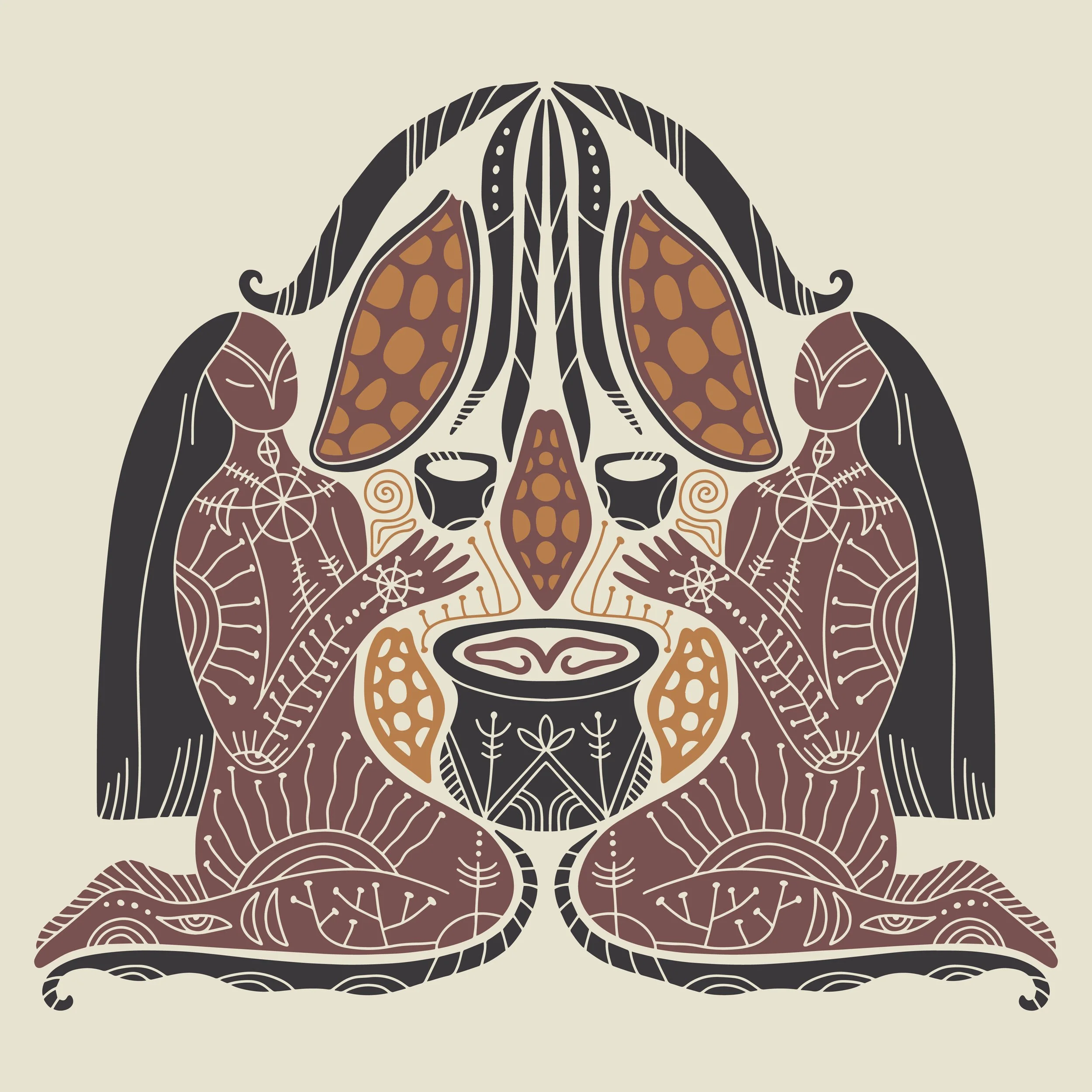
The Olmecs flourished in what is now southern Mexico from around 1500 BCE and were among the earliest known Mesoamerican cultures associated with cacao.
Chemical traces found in ancient pottery suggest that cacao beverages were already being prepared in the region thousands of years ago.
Exactly how the Olmecs understood cacao is difficult to know because they left no surviving written account explaining its use. Nevertheless, their relationship with cacao appears to form an important part of the plant's journey through Mesoamerica.
The cultures that followed would leave much clearer evidence of just how significant cacao had become.
Cacao and the Maya
For the ancient Maya, cacao was far more than something to eat or drink.
It appeared in art, mythology, ceremonies and religious life. Cacao was associated with fertility, abundance, status and the sacred, and cacao beverages were served during important occasions including feasts, marriages and rituals.
Unlike the sweet hot chocolate familiar to us today, cacao drinks were prepared with water and ingredients such as maize, chilli and other spices and were frequently poured from one vessel to another to create a prized layer of foam.
Cacao also had economic value. Beans could be exchanged for goods and services and became an important form of currency across parts of Mesoamerica. Both Maya and later Aztec societies valued cacao beans highly enough for them to function as money.
Even the language surrounding cacao tells us something about its communal nature.
The Maya verb chokola'j has been interpreted as meaning “to drink chocolate together”.
I love this idea because more than a thousand years later, it captures something many of us still experience when sharing cacao: its natural ability to bring people around the same table.
Or, as I like to call it, a sharemony.
Cacao and the Aztecs
By the time the Aztec Empire flourished in central Mexico, cacao had become extraordinarily valuable.
Because cacao trees thrive in humid tropical environments and could not easily be cultivated around the Aztec capital of Tenochtitlan, beans were brought into the empire through extensive trade and tribute networks.
Cacao was consumed as a beverage and used as currency, tribute and ceremonial offering. It was particularly associated with wealth, status, warriors, merchants and members of the elite.
The Aztec ruler Moctezuma II has become famously associated with cacao, with Spanish chroniclers describing cacao beverages being served at his court.
When the Spanish conquistadors arrived in the Americas in the early sixteenth century, therefore, they were not discovering cacao.
They were encountering an ancient and highly sophisticated cacao culture that had already existed for millennia.
That distinction matters.
When Cacao Crossed the Atlantic
Christopher Columbus encountered cacao beans during his fourth voyage to the Americas in 1502, when his men intercepted a trading canoe near the island of Guanaja.
But it was during the Spanish conquest of Mexico that Europeans began to understand the extraordinary importance of cacao within Mesoamerican society.
Hernán Cortés and other conquistadors encountered cacao at the Aztec court and subsequently introduced cacao beverages to Spain.
As cacao crossed the Atlantic, however, it began to change.
European drinkers increasingly added cane sugar and spices such as cinnamon and vanilla to counter its natural bitterness. Over time, drinking chocolate became fashionable amongst European aristocracy and wealthy households.
By the seventeenth century, chocolate houses had appeared in cities including London, where chocolate joined coffee and tea as one of the fashionable new imported beverages.
For most people, however, cacao remained an expensive luxury.
Its transformation from Indigenous ceremonial and cultural plant into European status symbol also coincided with colonial expansion, plantation agriculture and the exploitation of both land and human labour.
That part of cacao's history should not be forgotten.
Cacao as Medicine
Europeans did not initially regard cacao simply as a pleasurable drink.
It was also viewed as medicine.
European physicians attempted to understand cacao through the prevailing medical system of the time, particularly the theory of the four humours, and chocolate drinks were recommended in different preparations for digestion, nourishment, fever and other conditions.
By the seventeenth and eighteenth centuries, cacao had developed a considerable reputation as a restorative and strengthening food.
Its status created an unusual theological debate too.
Was chocolate food or drink?
And if it was a drink, could Catholics consume it while fasting?
The issue was debated for decades as chocolate became increasingly popular amongst European clergy and aristocracy. Eventually the principle that liquids did not break a religious fast became widely accepted, allowing drinking chocolate to remain part of European fasting culture.
From Cacao to Cocoa
For thousands of years, cacao had largely been prepared as a drink made from the whole or ground bean.
The Industrial Revolution changed everything.
In 1828, Coenraad van Houten patented a mechanical cocoa press capable of separating much of the natural cacao butter from ground cacao.
The remaining cacao cake could then be pulverised into a fine powder. Treating cacao with alkaline salts also created what became known as “Dutch processing”, producing a darker, milder powder that mixed more easily with water.
Cacao had begun its transformation into cocoa.
Then, in 1847, the British company J.S. Fry & Sons developed a method of combining cocoa powder, sugar and additional cacao butter to produce a mouldable solid chocolate.
Milk chocolate followed later in the nineteenth century, while Rodolphe Lindt's development of the conching process helped create the exceptionally smooth texture we now associate with modern chocolate.
Chocolate had been born as we recognise it today.
And cacao would never be viewed in quite the same way again.
The Commodification of Cacao
Industrialisation made chocolate affordable to millions of people.
But something was also lost.
Over the twentieth century, chocolate became increasingly disconnected from the cacao tree itself.
A plant that had been revered, traded, offered ceremonially and carefully prepared for thousands of years became the raw material for an enormous global confectionery industry.
Sugar, milk, flavourings and other ingredients increasingly dominated the finished product, while cacao became something most consumers rarely saw, understood or questioned.
Behind inexpensive chocolate was another uncomfortable reality: cacao increasingly became part of a global commodity system in which the person enjoying the finished product could be thousands of miles removed from the farmer who grew it.
The plant disappeared behind the product.
The farmer disappeared behind the brand.
And cacao became chocolate.
Remembering Cacao
Today, something interesting is happening.
More people are beginning to look behind the chocolate bar and rediscover cacao itself.
They want to know where their cacao was grown, who grew it, how farmers were paid, which varieties were cultivated, how the beans were fermented and whether the forests and soils where cacao grows are being protected.
There is also renewed interest in preparing cacao as a drink and sharing it intentionally with others.
I see this not as the discovery of something new, but as an opportunity to remember.
We cannot recreate ancient Maya, Aztec or Amazonian traditions, nor should we claim them as our own.
But we can approach cacao with respect.
We can acknowledge the Indigenous cultures that protected, cultivated and developed relationships with cacao long before it reached Europe.
We can respect the farmers and communities who keep those relationships alive today.
We can care about the soils, forests, pollinators and ecosystems that make cacao possible.
We can choose cacao that has been sourced responsibly and traded fairly.
And rather than consuming it unconsciously, we can occasionally pause and remember what we are holding in our hands.
From Commodity to Right Relationship
For me, this is what honouring cacao really means.
It is not about romanticising the past.
It is about restoring right relationship.
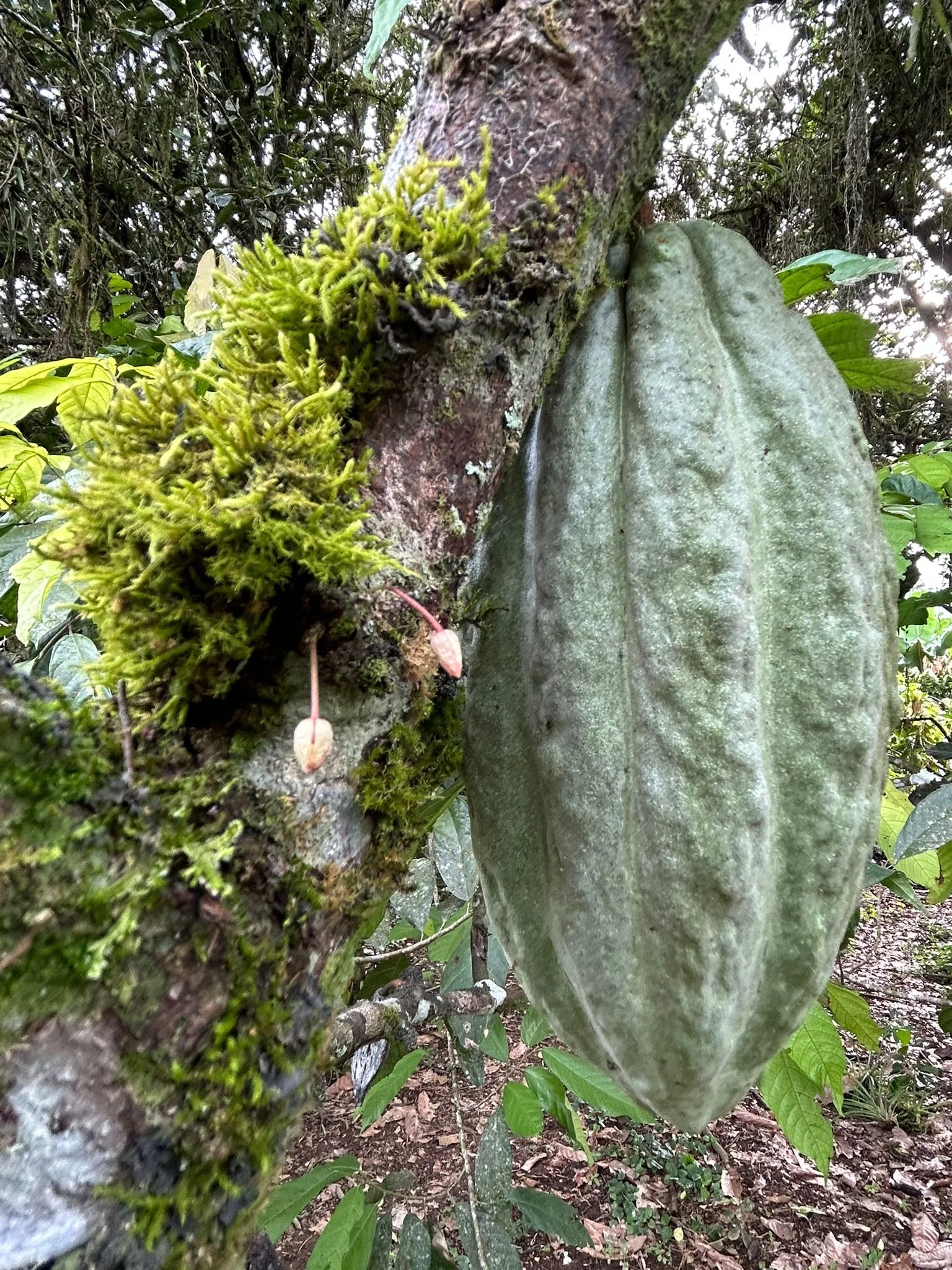
Cacao is the fruit of a tropical tree. Every pod takes months to grow. Every bean has been harvested, fermented, dried, transported and prepared through the work of many human hands before it reaches our cup.
When we understand this, cacao stops being an anonymous ingredient.
It becomes something we can appreciate.
The botanical name of the cacao tree, Theobroma cacao, famously translates from Greek as “food of the gods.”
Perhaps our ancestors understood something we have forgotten.
After centuries in which cacao has been increasingly processed, sweetened, commodified and disconnected from its origins, we have an opportunity to meet the plant again.
Not simply as chocolate.
Not simply as a commodity.
But as cacao.
A plant with more than five thousand years of human history behind it, carrying the stories of ancient peoples, tropical forests, farming communities and generations of human relationship.
So the next time you prepare your Ritual Cacao, take a moment before you drink it.
Consider where it has come from.
Give thanks to the tree that grew it, the land that nourished it and the people whose hands brought it to you.
And then drink.
Not just for the taste and the way it makes you feel.
But in honour of cacao.
Footnote
[1] Zarrillo, S., Gaikwad, N., Lanaud, C. et al. (2018). ‘The use and domestication of Theobroma cacao during the mid-Holocene in the upper Amazon.’ Nature Ecology & Evolution, 2, 1879–1888. https://doi.org/10.1038/s41559-018-0697-x