
World Chocolate Day: What Is the Future for Real Cacao?
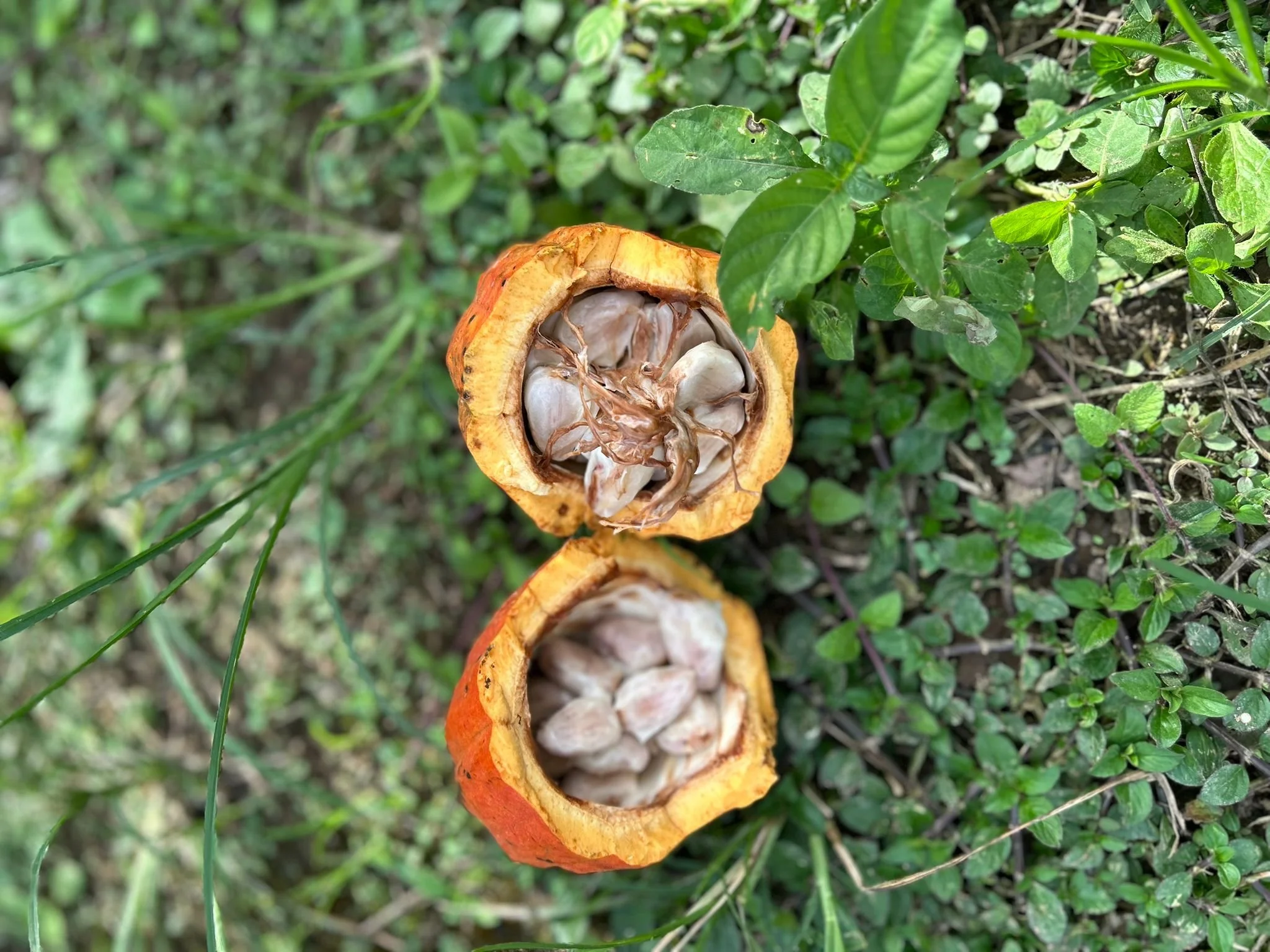
Today is World Chocolate Day, an opportunity to celebrate one of the world’s most loved foods, while also remembering where the journey of chocolate begins: with the cacao tree, the farmers who grow it, and the ancient cultures that have worked with cacao for thousands of years.
The day helps to shine a light on chocolate in all its forms, encouraging people to enjoy it, discover new products, and learn more about how it is grown and made.
For us, it is also an opportunity to look beyond commercial chocolate and reconnect people with pure ceremonial-grade cacao, its rich heritage, and the importance of choosing ethically sourced, high-quality products that honour the land, the trees and the people behind every bean.
Because right now, cacao is in trouble…
The Rise of Fake Chocolate
In the last couple of years Cocoa prices reached unprecedented highs, driven by poor harvests, extreme weather, disease and years of underinvestment in cacao-growing regions.
Although prices have since fallen significantly, the volatility has already transformed the chocolate industry and accelerated the development of products that use less cacao — or none at all.
In the past, the conversation focused largely on how the chocolate industry could protect cacao, improve farmers’ livelihoods and create more resilient supply chains.
Today, however, some of the world’s largest food and chocolate companies are also investing in ways to replace cacao.
One ingredient already entering mainstream products is ChoViva, a cocoa-free chocolate alternative made from fermented and roasted sunflower seeds. It has now been used in products connected to major companies including Nestlé, Mars and chocolate manufacturer Barry Callebaut.
ChoViva is marketed as a more sustainable and locally sourced alternative to chocolate, with a similar flavour and texture but without a single cacao bean.
Replacing cacao with a sunflower-based compound changes far more than the source of the chocolate flavour.
Nutritionally, ChoViva should not be regarded as equivalent to real cacao. Although sunflower seeds naturally contain valuable nutrients, ChoViva is highly processed with sugar, added vegetable fats and, depending on the product, milk powder or sunflower flour.
Pure cacao, by contrast, naturally contains minerals such as magnesium, iron, copper and potassium, as well as fibre, cacao fats and distinctive plant compounds including flavanols, polyphenals and theobromine.
ChoViva may reproduce some of the flavour and texture of chocolate, but it does not provide the same nutritional profile or naturally occurring compounds found in the cacao bean.
However, from a commercial perspective, it is easy to understand the attraction. Sunflower seeds can be sourced and scaled closer to European markets without relying on a tropical crop that is vulnerable to climate change, disease and fluctuating harvests.
But replacing cacao is not the same as protecting it.
Why This Matters—A Lot
Cacao is not simply another flavouring or commodity.
It supports the livelihoods of millions of farmers and their families, while cacao forests and agroforestry systems can provide vital habitats for plants, insects, birds and wildlife.
When cacao is cultivated within diverse agroforestry systems, rather than intensive monocultures, it can help protect biodiversity, regenerate soil, create shade, retain water and build greater resilience against a changing climate.
However, this requires long-term investment.
It requires chocolate companies to pay farmers fairly, protect genetic diversity, support climate-resilient farming and build transparent supply chains that reward growers for caring for the land.
Replacing cacao may provide companies with a more predictable ingredient, but it does little to address the underlying conditions that have made cacao farming so vulnerable in the first place.
When major companies begin normalising cocoa-free chocolate, they also risk reducing demand for the very crop and the farming communities they previously promised to protect.
Cacao Without the Cacao Tree
Alongside sunflower-based alternatives, scientists and food technology companies are now developing cacao through plant cell cultivation.
Instead of growing cacao pods on trees, cells taken from the cacao plant are cultivated inside controlled bioreactors. Companies working in this field hope the technology will eventually produce cocoa ingredients without relying on farmland, seasonal harvests or conventional cacao supply chains.
Supporters argue that this could reduce pressure on forests, protect supply from climate disruption and create ingredients with more consistent nutritional or flavour profiles.
However, they also raise deeper questions about our relationship withfood, farming and the natural world.
What happens to farming communities when crops can be produced inside laboratories rather than grown on the land?
What happens to the genetic diversity of cacao when food production becomes concentrated in proprietary technologies?
And what is lost when we remove the tree, the ecosystem, the farmer and the cultural heritage from the final product?
Innovation is not automatically a bad thing, but neither should it become an excuse to abandon the essential work of creating fairer, more sustainable and resilient agricultural systems.
The Future We Choose
The cacao crisis is not simply about scarcity. It is about the choices being made across the entire chocolate industry.
We can continue treating cacao as a cheap commodity, squeezing farmers and replacing the crop when it becomes too expensive.
Or we can recognise cacao as a precious natural resource that deserves to be valued, protected and grown in ways that support both people and planet.
This means paying a fairer price for chocolate and cacao. It means knowing where it has come from, how it has been cultivated and who has benefited from its production.
It also means accepting that genuinely ethical chocolate may need to cost more.
At Ritual Cacao, we believe the future of cacao should remain rooted in living trees, healthy soils, biodiverse landscapes and respectful relationships with farming communities.
Our cacao is grown within traditional agroforestry systems and sourced through transparent relationships that recognise the knowledge and work behind every harvest.
For us, cacao is not simply an ingredient to be replicated.
It is a plant with a rich cultural history, a livelihood, an ecosystem and a relationship that has been cultivated between humans and the natural world for thousands of years.
So, on World Chocolate Day, let us enjoy and celebrate chocolate—but let us also look more deeply at what we are supporting with every purchase.
Because the choices we make today will help determine whether future generations inherit thriving cacao forests and farming communities—or merely products that taste a little bit like chocolate.
Sources: