
From Ritual to Retail: What Happened to Easter Chocolate?
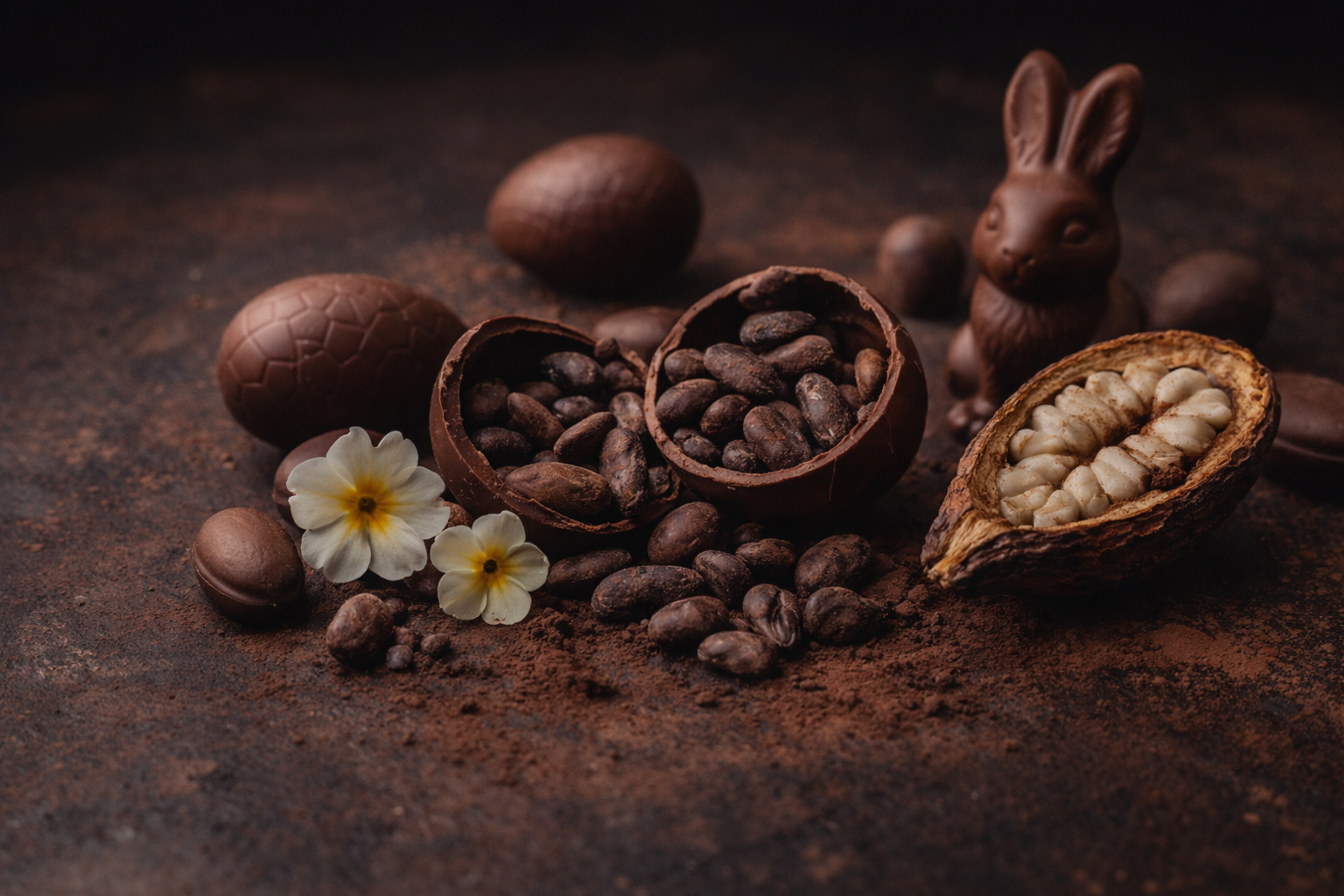
Easter is, at its core, is a sacred festival that has always marked renewal, resurrection, the return of light, and the promise that something new is emerging beneath the surface.
And yet, somewhere along the way, that sacredness has been overshadowed.
What we now experience is often a commercialised version of Easter, one that centres around mass-produced chocolate. Flattened into foil-wrapped sugar, stripped of meaning, and without awareness of where it comes from, how it’s made, or who it impacts.
But not all chocolate is the same, it’s not even close.
Most of what we consume at Easter isn’t really cacao in any meaningful sense. It’s chocolate-flavoured products that are highly processed, bulked out with sugar, milk powders, emulsifiers and additives, designed for shelf life and mass production, not nourishment or connection.
The cacao content is often minimal, and what is there is usually commodified to the point where its origin, quality and impact have been erased.
And that’s where it matters.
Because cacao, in its true form, is not just an ingredient. It’s an agricultural product, a livelihood, an ecosystem, and for many cultures, a plant with deep ceremonial and cultural significance.
When we reduce it to cheap confectionery, we disconnect from all of that, and we participate in a system that often exploits the seed, the land and the people.
So this Easter take a moment to pause and actually ask: what am I buying, and what am I supporting?
Fair trade is a starting point, but it’s not the full picture. It’s about whether farmers are genuinely empowered, not just paid slightly more within the same extractive system.
It’s about transparency in sourcing, and whether growers have real agency, ownership, and long-term stability, and whether the land is being depleted or regenerated.
And then there’s the cacao itself.
Real ceremonial-grade cacao hasn’t been stripped down into something unrecognisable. It’s just 100% pure, organically grown single origin cacao bean. You can taste the difference immediately, because it still carries the good vibration of clean soils, respected farmers, and healthy ecosystems.
That, to me, is where Ritual Cacao comes in this Easter.
Ritual cacao isn’t about performance or trend. It’s about restoring our relationship to the plant, to the people who grow it, and to ourselves.
It invites a different way of consuming cacao. It asks you to slow down, rather than consume unconsciously. When we pay attention to the taste, the vibration and the goodness, we are reminded that consumption can be a conscious act, and what we take in actually has meaning, and consequences.
Easter, at its core, is about renewal. But renewal isn’t just symbolic. It’s also practical, in the choices we make, the systems we support, and the level of awareness we bring to what we consume.
So instead of defaulting to the same cheap, nasty chocolate this year, take a moment:
Look at where it comes from.
Question how it’s made.
Notice how it tastes.
Because the difference between chocolate and cacao is the difference between unconscious consumption and conscious relationship.
And that’s where the real shift begins.